When selecting self-adhesive labels, many buyers focus on the temperature conditions their products will experience during storage, transportation, and use. However, there is another important factor that is often overlooked: the temperature at which the label is actually applied.
Application temperature and service temperature are two different specifications. Choosing a label based only on its service temperature may lead to adhesion problems during the labeling process, even if the material is suitable for the product's final storage environment.
For food, beverage, pharmaceutical, cosmetic, and other consumer product packaging, understanding these two temperature ranges is essential for selecting the right label material and adhesive.
In this article, we explain the differences between application temperature and service temperature, common labeling challenges, and what buyers should consider before placing an order.
1. What Is Label Application Temperature?
Application temperature refers to the temperature conditions under which a self-adhesive label is applied to a product surface.
It is generally specified as a temperature range within which the adhesive can achieve the required initial contact and bonding performance.
For example, labels may be applied to:
- Room-temperature glass bottles
- Plastic containers after filling
- Refrigerated food packaging
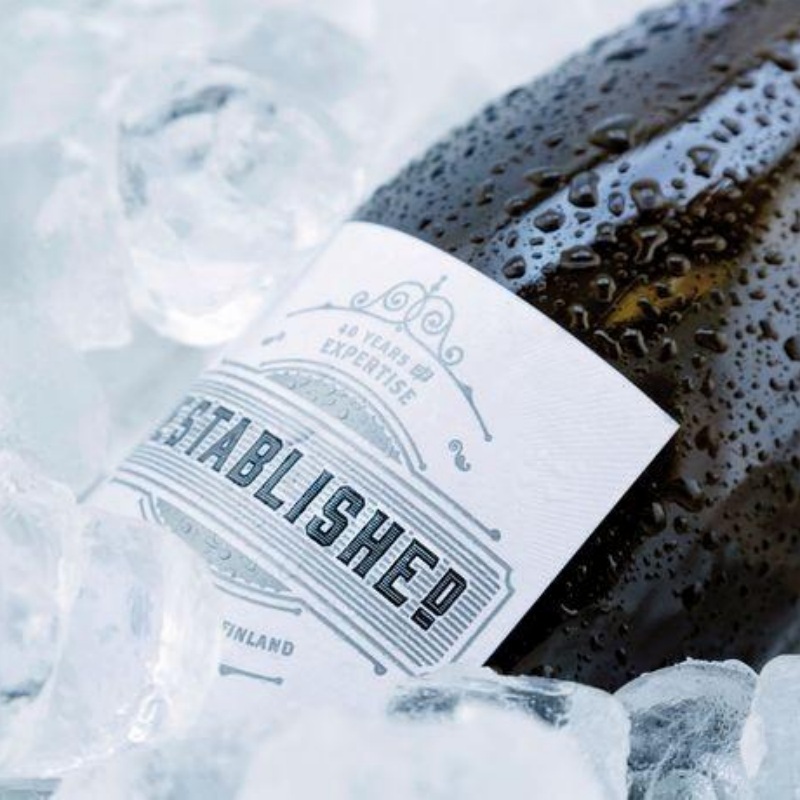
- Chilled beverage bottles
- Products coming directly from cold storage
The actual application conditions can significantly influence label performance.
Why Does Application Temperature Matter?
Pressure-sensitive adhesives need sufficient contact with the substrate to develop adhesion.
When the application temperature is too low, the adhesive may become less flexible and may not establish adequate contact with the surface. This can result in:
- Poor initial adhesion
- Lifting at label edges
- Wrinkles or incomplete bonding
- Labels falling off during handling or transportation
In addition to temperature, surface cleanliness, condensation, labeling pressure, and application speed can also affect the bonding process.
2. What Is Label Service Temperature?
Service temperature refers to the temperature range that an applied label is expected to withstand during its intended use.
Unlike application temperature, which relates to the labeling process, service temperature concerns the conditions after the label has been applied and the adhesive has developed sufficient bonding strength.
Depending on the adhesive construction, service temperature specifications may include minimum and maximum operating temperatures.
Typical applications include:
Refrigerated Products
Labels used on dairy products, chilled beverages, and fresh food packaging may need to withstand low-temperature storage conditions.
Frozen Food Packaging
Frozen food labels must maintain adhesion and appearance during prolonged exposure to freezing environments.
Hot-Fill Products
Labels for hot-filled beverages, sauces, and other food products may experience elevated temperatures during filling or subsequent processing.
Outdoor and Industrial Products
Labels used on products exposed to changing environmental conditions may require resistance to temperature fluctuations.
It is important to note that the service temperature range does not necessarily indicate that a label can be applied at those same temperatures.
3. Application Temperature vs. Service Temperature: Key Differences
Although both specifications relate to temperature, they describe different stages of label performance.
| Comparison |
Application Temperature |
Service Temperature |
| Meaning |
Temperature during label application |
Temperature after label application |
| Main Focus |
Initial adhesive contact and bonding |
Long-term adhesion and performance |
| Relevant Stage |
Labeling process |
Storage, transportation, and product use |
| Main Risk |
Poor initial adhesion |
Edge lifting or label detachment during use |
| Key Consideration |
Surface temperature during application |
Actual operating temperature conditions |
For example, a product may require a label that can be applied at room temperature but must remain securely attached during refrigerated storage.
In this situation, the adhesive needs to be suitable for both the application environment and the subsequent low-temperature conditions.
Therefore, buyers should evaluate both specifications rather than selecting a label based on only one temperature value.
4. Common Temperature-Related Labeling Challenges
Understanding the difference between these two temperature specifications helps prevent several common problems.
Labels Applied to Cold Surfaces
Applying ordinary labels to refrigerated bottles or containers can be challenging.
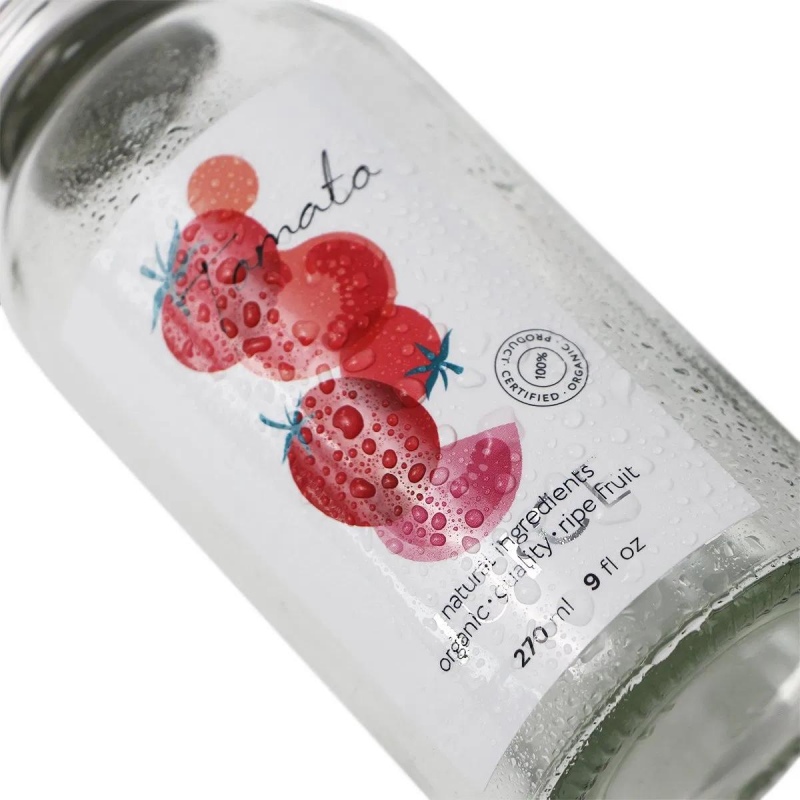
Low surface temperatures may reduce the adhesive's ability to establish proper contact. If moisture or condensation is present, bonding can become even more difficult.
Recommended Considerations:
- Confirm the actual surface temperature during labeling.
- Check whether the adhesive is designed for cold-temperature application.
- Ensure the container surface is clean and free from condensation where required.
- Test the label under actual production conditions.
Labels Used in Freezer Environments
A label may be applied successfully at room temperature but later experience poor adhesion when the product enters a freezer.
This is because the adhesive must maintain its bonding performance under the expected low-temperature storage conditions.
For frozen food packaging, buyers should consider adhesives specifically developed for freezer applications.
It is also important to distinguish between labels applied before freezing and labels applied directly to already frozen products. These situations may require different adhesive solutions.
Labels Exposed to High Temperatures
Some products experience elevated temperatures during filling, processing, or transportation.
For example, hot-fill food and beverage packaging may expose labels to heat shortly after application.
In these cases, buyers should evaluate:
- Adhesive temperature resistance
- Face material dimensional stability
- Printing ink performance
- Varnishing or lamination compatibility
- Resistance to moisture and condensation during cooling
The complete label construction should be tested under the actual processing conditions.
Temperature Changes During Transportation
Products may move between different temperature environments during transportation and distribution.
For example, refrigerated beverages may experience temperature fluctuations when moved from cold storage to retail display.
Repeated temperature changes can affect the adhesive and label structure, particularly when combined with humidity and condensation.
Testing under representative transportation and storage conditions can help identify potential problems before mass production.
5. How to Choose the Right Label Adhesive for Different Temperature Conditions
The adhesive is one of the most important components determining label performance across different temperature environments.
Here are several common application scenarios and the factors buyers should consider.
Room-Temperature Application and Refrigerated Storage
This is a common requirement for beverage and food packaging.
Labels are applied under normal production conditions but must remain attached when products are stored in refrigerators.
A suitable permanent adhesive should provide reliable initial bonding and maintain adhesion during refrigerated storage.
Cold-Temperature Application
For products labeled directly in refrigerated environments, ordinary permanent adhesives may not provide sufficient initial bonding.
A cold-temperature or freezer-grade adhesive may be more suitable, depending on the actual application temperature and packaging surface.
Frozen Product Applications
For frozen food products, the adhesive must be suitable for the required application and storage conditions.
Buyers should confirm whether labeling takes place before or after freezing, as well as whether condensation or frost is present on the packaging.
Hot-Fill Applications
For products exposed to elevated temperatures after filling, the adhesive and face material must be evaluated together.
The label should maintain adhesion and dimensional stability under the expected processing conditions.
A suitable construction may also require protective surface finishing to maintain the appearance of printed graphics.
6. Other Factors That Affect Label Performance
Temperature is important, but it is not the only factor that determines whether a label performs well.
Before selecting a label, buyers should also consider the following:
Packaging Surface Material
Glass, PET, PP, PE, and HDPE containers have different surface characteristics.
Some plastic materials, especially PE and PP, have relatively low surface energy and may require specially formulated adhesives.
Surface Condition
Dust, oil, moisture, condensation, and other contaminants can interfere with adhesive bonding.
A clean and suitable application surface is essential for consistent results.
Label Face Material
Different face materials respond differently to temperature changes.
BOPP, PET, synthetic paper, and coated paper each have different properties relating to flexibility, dimensional stability, and environmental resistance.
Adhesive Bonding Time
Adhesion can develop over time after the label is applied.
Initial adhesion and final bonding strength are not necessarily the same. Buyers should consider the required conditioning period before evaluating label performance.
Labeling Equipment
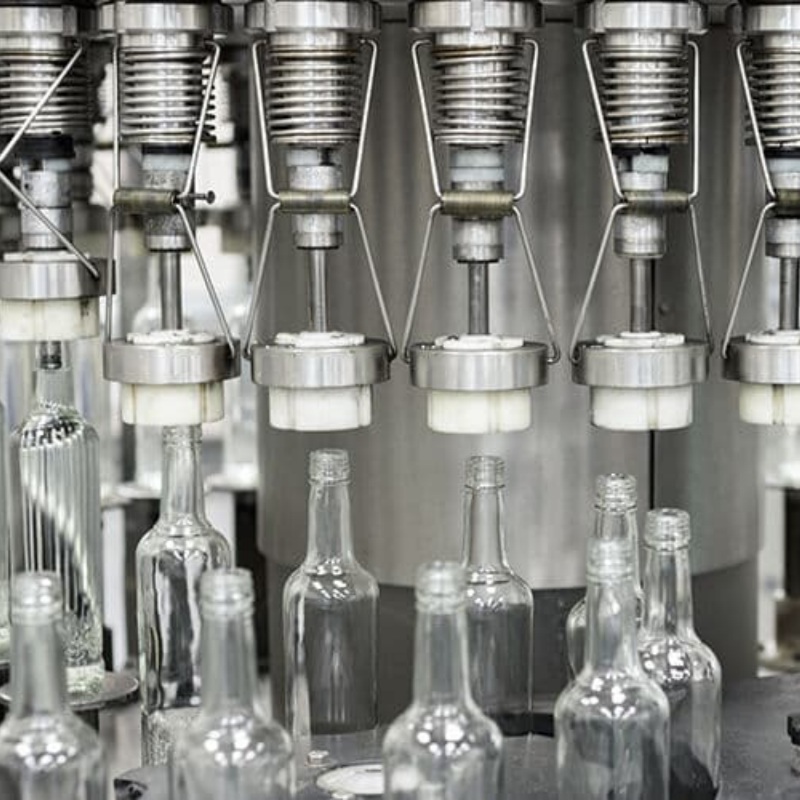
Automatic labeling machines may operate at high speeds and apply labels under different pressure conditions.
The adhesive and label construction should be compatible with the equipment and production process.
7. What Information Should Buyers Provide Before Ordering?
To help a label manufacturer recommend a suitable material and adhesive, buyers should provide more than just the label dimensions and quantity.
The following information is particularly useful:
- Packaging Material: Is the container made of glass, PET, PP, PE, HDPE, or another material?
- Application Temperature: What is the actual surface temperature when the label is applied?
- Storage Temperature: Will the product be stored at room temperature, refrigerated, or frozen?
- Processing Conditions: Will the product undergo hot filling, pasteurization, or other heat-related processes?
- Environmental Conditions: Will the label be exposed to moisture, condensation, oil, or frequent temperature changes?
- Labeling Method: Are labels applied manually or using an automatic labeling machine?
Providing these details allows the manufacturer to evaluate the complete application requirements and recommend a more appropriate label construction.
8. Custom Temperature-Resistant Labels from Jinke Label
At Jinke Label, we manufacture customized self-adhesive labels for food, beverage, cosmetic, pharmaceutical, and personal care packaging.
Different products have different labeling environments. Therefore, selecting the right material and adhesive requires understanding both the application conditions and the product's actual service environment.
Our available label materials include:
- White and Transparent BOPP
- PET Film
- PE Film
- Synthetic Paper
- Coated Paper
- Metallic and Specialty Materials
We can also provide different printing and finishing options, including flexographic printing, offset printing, gloss and matte varnishing, and film lamination.
For projects involving refrigerated storage, frozen environments, or elevated temperatures, our team can help evaluate suitable material and adhesive combinations based on your packaging requirements.
We also conduct performance checks according to project requirements, including adhesion, temperature-related performance, and other relevant quality evaluations.
Our goal is to help customers find label solutions that are compatible with their packaging materials, production processes, and end-use conditions.
9. Request a Custom Label Solution
Are you looking for labels for refrigerated beverages, frozen food, hot-fill products, or other temperature-sensitive packaging applications?
To help us recommend a suitable solution and prepare an accurate quotation, please share:
- Your label artwork or design file
- Label dimensions and required quantity
- Packaging material
- Actual application temperature
- Expected storage and service temperature
- Any special processing or environmental conditions
If you have an existing label sample or product packaging sample, you can also share it with us for reference.
Contact Jinke Label to discuss your custom self-adhesive label requirements.


 Italiano




 Sales Executive